
What my Country can Learn From Africa and the Rest of the Global South
In Britain, the flesh is strong but the spirit is weak

A change in subject matter
I normally use this Substack to share my insights about Africa. As someone with ancestral ties to the continent, who is also a third generation Brit that spent several years living in multiple African nations, I hold a unique perspective. I believe that Africa holds meteoric levels of potential that Africans and the rest of the world need to tap into for the sake of economic survival.
On this occasion though I want to talk about something else: my country of the United Kingdom and Great Britain. Specifically, what it is that we can learn from the children of our old empire within Africa and the rest of the Global South, and adapt to fit our own national context.
Welcome to the “Yookay”
The UK - as it is today - is becoming unrecognizable from the country that I grew up in. We have declined in geopolitical influence, economic prominence, and in our living standards.
If we were a US state, we would be poorer than Mississippi on a per capita basis. Without help from our families, most of us Millennials and Zoomers are unable to get on the housing ladder. Increasingly more of us are resorting to living out of our caravans and on boats in order to get by. Most of us have or will spend a considerable portion of our twenties living with Mum and Dad, or for some of us, just Mum. Accountants, nurses, doctors, teachers, law professionals, skilled tradespeople, can’t afford to keep their homes warm during winter.
More of us are struggling to eat than ever before. This is not an exaggeration, you are reading that right. In 2011, the Trussell Trust had 35 foodbanks scattered throughout Blighty. This figure ballooned to approximately 1300 in 2020 (before the effects of COVID and relatively sky-high rates of inflation). To really drive the message home allow me to present more raw data and figures on this. 61,000 food aid parcels were delivered to people in Britain in 2011, with the total rising to 1.9 million by 2020.
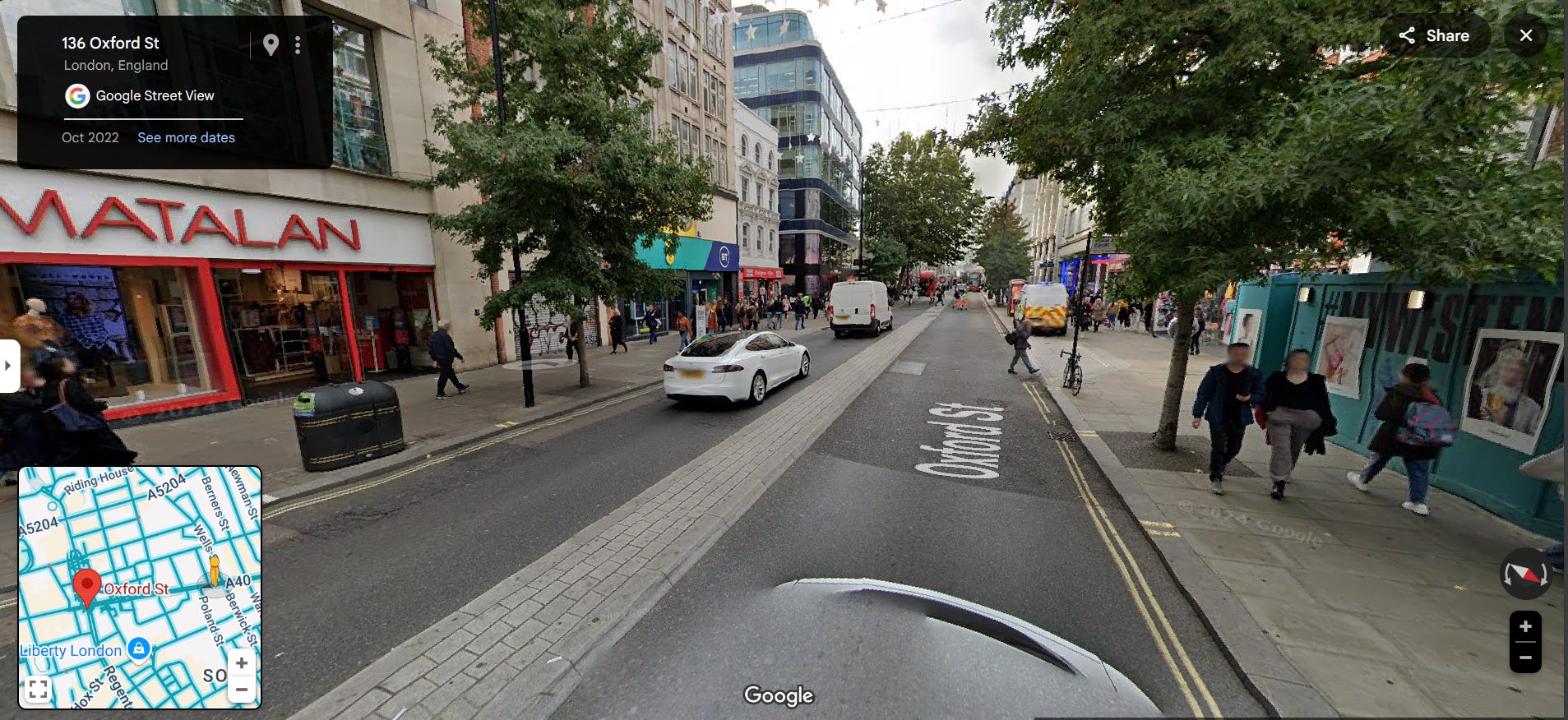
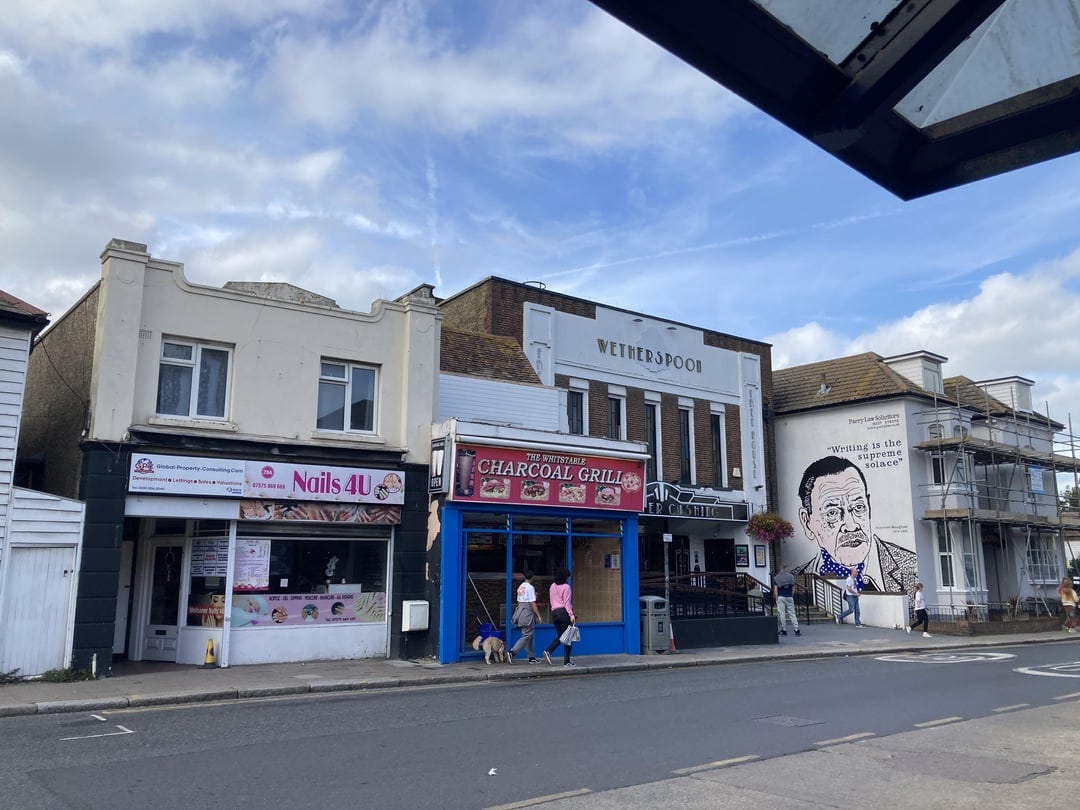
The descent into destitution is unprecedented. High streets once filled with shops, bars, and restaurants fulfilling almost every niche imaginable, are now littered with vape shops, Chinese and Indian takeaways, and charity shops selling used clothes and items. Roads riddled with potholes are becoming the norm. Every other car on the road is 15-20 years old, and most of the new ones are paid for on finance (bought on credit). The shops now have items that were once easily attainable, like cheese, salmon fish and condom box sets, locked away in security cases. We have one of the highest rates of homelessness across the developed world.
Churchill wept
Earlier this month, our government in Westminster held an emergency parliamentary session on a Saturday for the first time in 43 years to discuss rescue plans for the Chinese-owned British Steel: home to our last two remaining blast furnaces capable of producing steel from scratch. We were the first nation on Earth to deploy coke-powered blast furnaces, paving the way for the Industrial Revolution, now we’re unable to sustainably run them - how far we’ve fallen.
Many of us weep and grieve our deterioration in silence because our stiff upper lips get in the way of the wail. It feels like we have regressed so far back in time within the space of 15 years. The UK I am describing to you reads like the one I would read about in old Dickens’s novels back in school. It’s like we’re back in Victorian England but without the industrial expansion and innovation, community-orientated culture and large families to fall back on.
But this in the UK of 2025. This is real, this is widespread, this is systemic. What you see in official figures and news report might suggest otherwise, and much of the youth and our ever-expanding immigrant population might not know any better, but they’re talking a load of rubbish, a poorer UK is an objective reality. We have dropped from the ranks of high-income countries to those of the mid-income, emerging economies in everything but official classification. We are a developing nation with a posh accent and a maxed-out credit card.
Where are we going wrong? As you’ll see, what is thriving across the developing world is waning over here in the UK. For today’s article, I’m going to start by focusing on one lesson, and I may write more about this as part of future instalments.
So, for what it’s worth, here’s my two pence:
We’ve overregulated ourselves into rigidity in areas where economic flexibility reigns supreme in the Global South
Environment-related regulations and the burdensome restrictions of the 1947 Town and Country Planning Act have sucked the vitality out of our small businesses and self-employed workforce.
Throughout the UK, regions where lots of economic opportunities lie in respect to their transport connections, infrastructure quality and market access have become expensive to live at and operate businesses in.
These areas are largely found in the South East of England, encompassing cities like London, Cambridge and Oxford, Reading, Brighton and surrounding towns. A handful exist in and around the West Country in places such as Bristol, Bath, Exeter and Cardiff, then there’s Birmingham and Coventry out in the Midlands. Go further north and you have Manchester, Leeds, and Liverpool to a lesser extent. Scotland has Edinburgh, and increasingly, Glasgow.
Residential rents, municipal taxes like council tax, and house prices across these economic hubs are increasingly pricing out the young. While commercial rents and business rates here represent considerable barriers to entry for new business start-ups. The result being that these cities get engulfed by large American corporations and crime syndicates who operate shopfronts as platforms for money laundering.
Transitioning from a nation of builders to one of rule-loving pencil pushers
On the other hand, across the country, where living costs are relatively cheap, planning permissions and requirements still dictate what you can and can’t do with land and buildings. These govern everything, from where you can build or expand housing or commercial properties, to where you can set-up a market stall, park your car, and whether you can make a bedroom extension to the house you own. They tend to be strict, and what is even worse is that they lack uniformity in their legal contents and application.
So, you might have one part of town that plays host to an assortment of bustling restaurants, and you might want to open up a fine meats butchery on the same street to capitalize off of the neighbouring businesses. You spot a vacant shopfront and wish to submit an offer. But before you do, you need to first receive approval for planning permission from the local council. The outcome surrounding planning approval is contingent on the peculiarities of that specific council, it’s not a simple matter of zoning like almost everywhere else in the world.
You might be given the OK, but on the other hand, you might not be. Local residents might complain to the council about how they view the sight and smell of displayed meat carcasses as “unpleasant”. Others might voice concerns about what impact your food delivery trucks may have on local congestion and pollution levels. Unless you can establish a case for how your enterprise will unlock vast economic benefits for that neighbourhood with immediate effect, then prepare to venture elsewhere for viable locations.
NIMBYism has run amok in the UK, prioritizing incumbent businesses and establishments over new upstarts, and often times tending to the interests of older, more settled populations at the expense of the young and mobile.
Serfs to the bureaucracy and our corporate overlords
This is just one example, I can go on, but our overall system and laws around land use are so prohibitive, and have in turn, limited our rights to life, liberty and property (to quote British philosopher John Locke). The government has all but effectively nationalized land. The Enclosure Acts that were implemented throughout the UK from the beginning of the 17th century to the early 20th century, sliced and diced communally-owned land into patches of privately held spaces.
Many argue that this series of changes meant that farming communities lost their ability to freely grow their own food and flexibly utilize land for their cattle to graze over time. Consequently, formerly self-sufficient and autonomous farmers turned into wage labourers, as many were forced to migrate into the cities and towns to eek out a living and earn the cash necessary to buy the food and materials they once produced for self.
In many ways, the 1947 Town and Country Planning Act is a continuation of this process. By attaching considerable regulatory burden, i.e. cost, to land and property use, it has pigeonholed a lot of us into working as employees for employers. Less than one percent of these employers provide our country with 40 percent of its jobs and 48 percent of its turnover, leaving us beholden to and reliant upon a tiny number of large businesses to earn money and buy from.
Conversely, the picture surrounding employment across the developing world is a far cry from what you see in the UK. All over Africa, parts of Latin America and the Caribbean, South and Southeast Asia, most of the workforce tends to be engaged in the informal sector. Of those working informally, they are either self-employed or working as one of a handful of employees for a small business. Lax enforcement of rules and regulations on the ground gives way for the flexibility fueling these patterns. And while some view this persistent trend as problematic and as something for those countries to eventually “move on” from, I beg to differ.
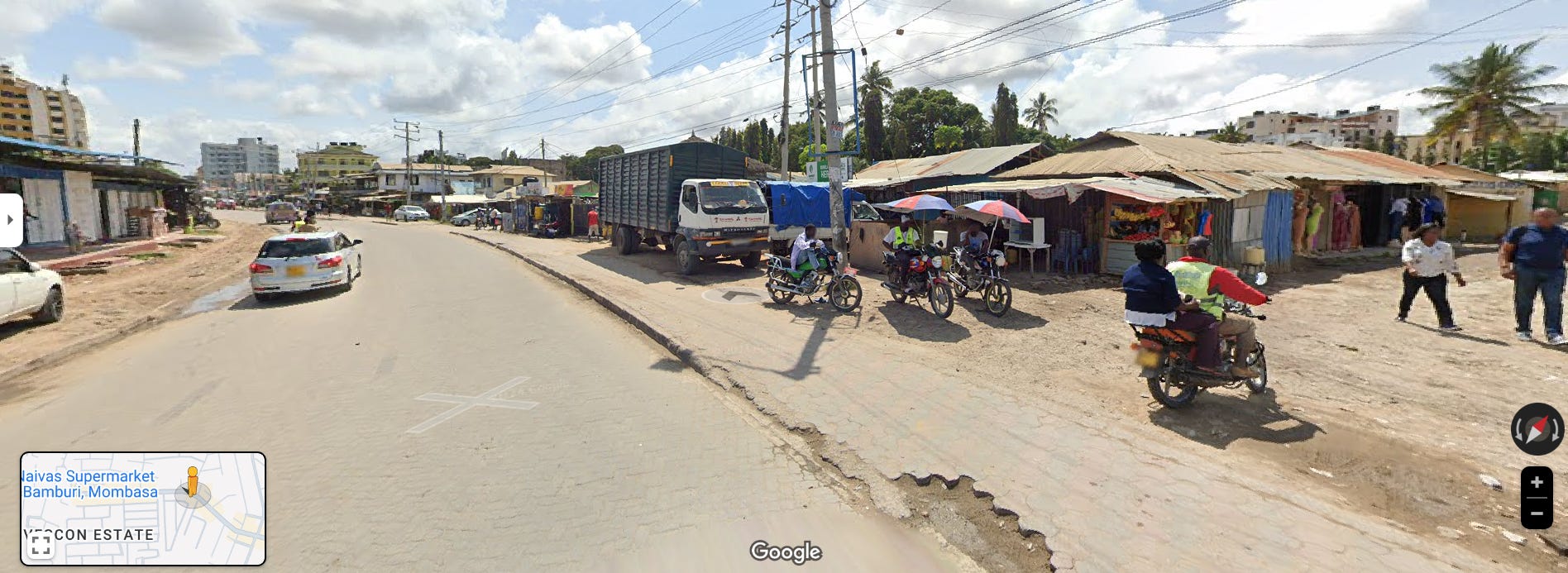
The ease with which you can set-up shop in the Global South fosters a sense of resilience and adaptability that we have long lost over here in Britain. For most of us, in the United Kingdom, if you don’t have a job, you must find another one quickly as without one you will not be able to eat. Granted, a sizeable portion of us (almost 20 percent) will go into business or become self-employed, but that still leaves over 80 percent of us relying on someone else to employ and deploy our labour. Then there are those of us who end up signing-on for welfare benefits, wedding us even closer to the nanny embraces of the state, rocking us from cradle to grave.
Where citizens of the Global South rely on themselves, their families and extended local networks to secure their own food, clothing and shelter, us over here in Britain look to faceless corporations, the government, and the mounting bureaucracy that enforces the rule of the state. If life out there in the Global South is a jungle, then it’s a zoo in the UK and other industrialized nations. We have become domesticated and defanged, sedated by football, beer, Strictly Come Dancing, and tabloid newspapers and gossip columns.
So here we are, the birthplace of modern capitalism and industrialism might be the first to fully deindustrialize. The star student of the Roman Empire is now most closely mirroring its decline. With that said, it does not have to be this way because we still have a lot going for us. We’re a top 10 economy by all measures despite only being the 22nd largest country in the world by population. We are still home to a lot of exceptionally smart, talented and wealthy people and institutions. But we need to shake off our complacency and update our operating system to adjust for a new era - which involves borrowing some practices from Africa and the rest of the Global South, as the algorithm for growth continues to reward these regions over ours.
More on this series soon...
Interesting article Tim. I would describe what you’re saying as the matrix. Most people in the west are stuck in a matrix perpetuated by the government. Combine that with a high a trust society: the idea of “culture” is just blending into what you’ve described. The 20% self employed stat is really emblematic of the 80/20 principle/pareto principle: despite this matrix, the reason the west remains at the top, for now, is due to the 20% of the populating driving it forward. Innovating etc