
What Africa Today & the Europe of the Dark Ages Share in Common
Adding another rhyme to the beats of history

This short piece is just me attempting to reflect on the state of the African continent several decades post-Independence. Just me thinking out aloud.
Anyway, I present to you Exhibit A and Exhibit B:
Exhibit A: a liberated and booming Africa
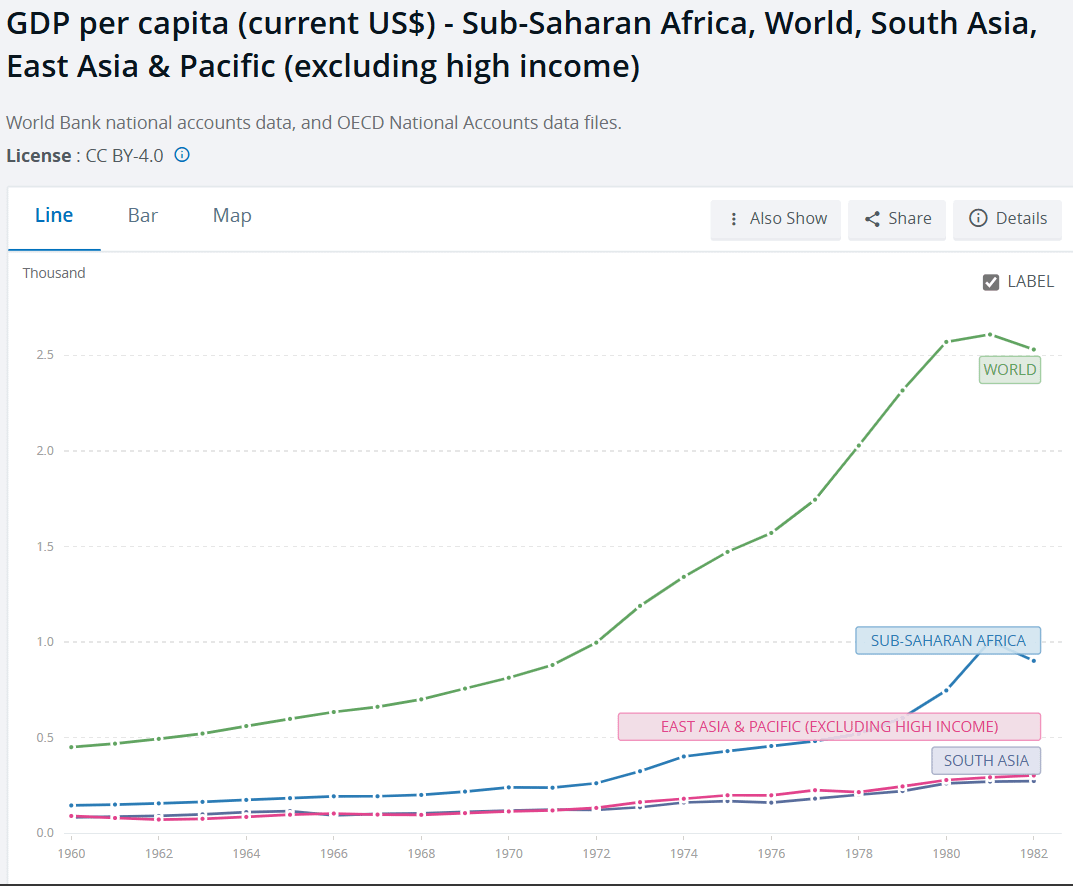
In 1960, a handful of African nations including Egypt, Algeria and Ghana had attained independence. Scores more went on to achieve liberation by the end of the decade. Contrary to popular belief, best exemplified by Walter Rodney's work, 'How Europe Underdeveloped Africa', many newly christened African nations actually started off in a comparatively favourable position relative to the rest of the world.
Indeed, some countries such as Ghana, had inherited considerable infrastructure in the form of schools, hospitals and railroad, thriving industries and deep foreign currency reserves at the beginning of independence.
As seen in the chart above, Sub-Saharan African GDP per capita in 1960 was slightly less than a third that of global GDP per capita. This trend held strong for multiple decades. In 1981, the gap narrowed and minimized the split to the point where global GDP per capita was only 2.6 times more than that of Sub-Saharan Africa's. For better context, if this ratio held true today, then average incomes across this African region would be more than TRIPLE current figures. People would earn almost $15 per day instead of the present estimate of around $5 per day.
In large part thanks to a boom in commodity prices, 1981 represented the zenith of African economic performance.
Exhibit B: An underperforming Africa
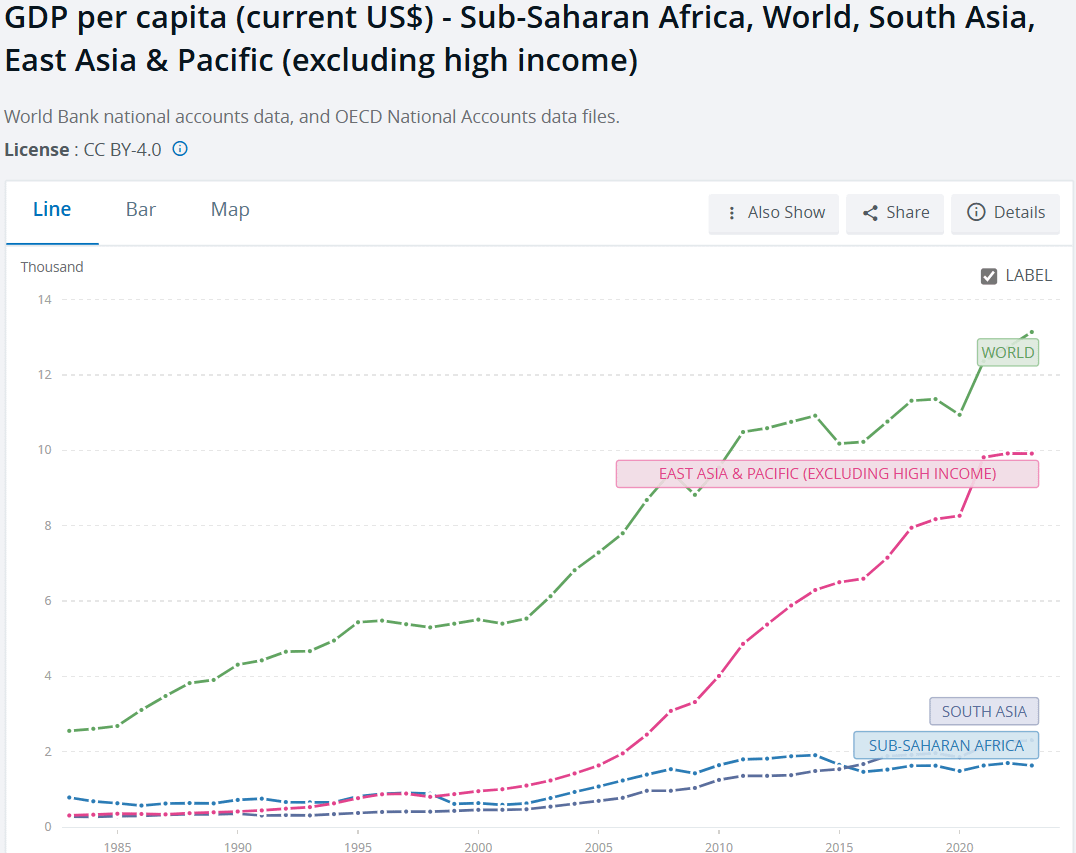
From the 1980's onwards, as monetary policy across the Western World tightened, and commodity price pressures eased in response, much of Africa got caught up in a dangerous debt cycle. Debt accrued throughout the 1960's and 1970's became more expensive to repay, right at the time when export revenues from commodities started dropping off.
Debt infused investment carried out by African states into expanding infrastructure, schools and industries also failed to generate sufficient returns largely as a result of inefficient central planning and the widespread misallocation of taxpayer funds.
Growth throughout the continent went on the wane as a result. In 1981, Sub-Saharan African GDP per capita was more than triple that of East Asia & Pacific (excluding high income) and South Asia. But, 20 years later in 2001 the gap between Sub-Saharan Africa and South Asia had considerably narrowed, while the gap went in the opposite direction with the East Asia & Pacific region with their average standing at 1.7 times that of Sub-Saharan Africa's.
In 2023, South Asia had already joined East Asia & the Pacific region in eclipsing Sub-Saharan Africa in the realm of GDP per capita. East Asia & the Pacific region's GDP per capita is now 6 times that of Sub-Saharan Africa's - what a difference 40 years can make.
Walking the path of a journeyman to know oneself
In many ways, what we see a lot of Africa suffering from harkens back to the period of the Dark Ages that occurred all over Europe in the wake of the dissolution of the Roman Empire.
The case of England illustrates this well. As the most advanced and industrialized civilization of the lot, the Romans and their 350 year occupation of England (beginning in 43 AD) introduced practices and built infrastructure that considerably raised the living standards of the English. Concrete roads, sewerage systems, public bathhouses and new water navigation techniques cemented a Roman legacy throughout the country that still persists to this very day.
The Fall of Rome in the late 5th Century sent shockwaves throughout the world. It's actually difficult to put into words how important the Roman Empire was to establishing the foundation of the modern Western World.
If Western powers and civilizations were smartphones, then Rome would be the original iPhone. And tbh, this comparison in and of itself doesn't even do justice to highlighting their true impact! If anything, the legacy of the Roman Empire to the West is akin to an Android or IOS operating system, on which almost all of our modern mobile devices run off of.
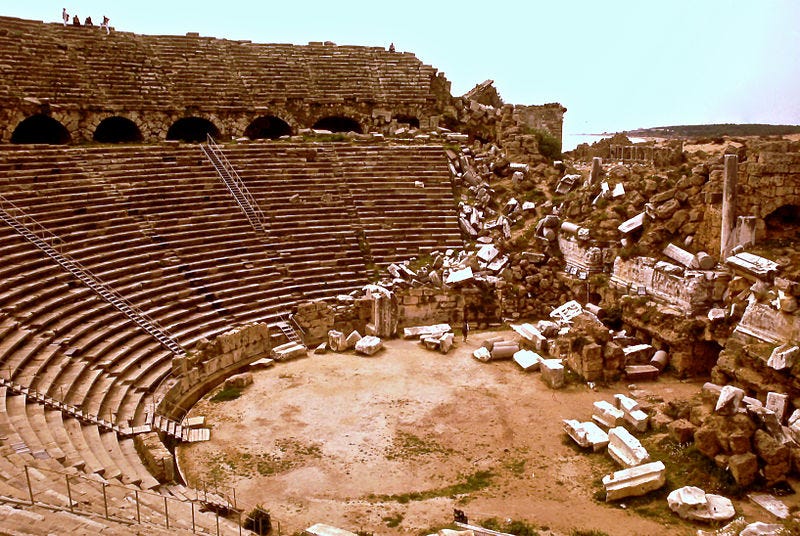
Upon the Roman occupiers exiting England, the country plunged into decline with almost immediate effect. The governance frameworks and capacity to govern that had previously held the country together was no longer, food production fell, the litany of technical applications and crafts once taken for granted fell into short supply or were forgotten about altogether. The last of those subsequently prevented England from being able to manufacture the things the population once relied on for a higher quality and less toilsome life: for example, the production of high-quality pottery like the Roman Samian ware ceased, leading to a decline in everyday household goods.
According to historians, it wasn't until some 800-900 years later, during the Middle Ages that English quality of life, in terms of diet intake and life expectancy, caught up with the highs experienced under the Roman Occupation. Advanced techniques of industrial production and trade like water-powered mills, centralized manufacturing, sophisticated metallurgy, and widespread use of concrete, that were once a common sight across England nearly 2,000 years ago, only returned to the country in the late 1700's, at the onset of the Industrial Revolution.
A panoramic view of Africa’s fortunes and misgivings
Tying this back into Africa: the impact that colonialism had on Africa is complex, it simply isn't as simple "Everything about European colonialism was bad and it's all their fault that Africa is in its current predicament." Nor was everything about Europe's colonial episode in Africa good, as nations such as the Democratic Republic of Congo can certainly attest to. The matter is multi-faceted, there is no one catch-all answer.
The contents of this piece also serve to highlight that the nature of Africa's plight is not particularly unique to it. Africa isn't cursed and doomed to a fate of poverty and mediocrity. But, much like other regions of the past, it is out-of-step with the demands of a new world at hand, all the while trying to climb its way out of stagnancy with a view obscured by the lofty shadows that still loom on from its colonial past.
Hello Timothy, Malik Djinadou, and all. Please see/share our research from Captain Dan Hanley and others and help us improve it if you can. Thank you!
https://michaelatkinson.substack.com/
Sincerely,
Michael
🦖