
Say, Keynes, Plato and Aristotle Pt. 2
Is it inspiring or is it just a bunch of razzle dazzle?

In the right hands, symbolic language and communication is inspiration. In the wrong hands, it turns into razzle dazzle.

Are you channeling dreams or delusion?
Now, the phrase “razzle dazzle” might conjure up images of the finesse and fantastical for some of you. As, for a lot of us, it’s a term we normally use in reference to hucksters, confidence-men and entertainers. We hear this term and picture a sleight of hand, the practice of illusion for manipulation and deceit. There’s something shady about it, like the old village peddler from Jack and the Beanstalk seen above.
The old village peddler trope harkens back to a time when Europe was divided along the lines of clan and was ruled over by local serf overlords or distant monarchs and emperors. A time when the village - not the city - was the bastion of European culture and heritage. A time when the majority of Europeans belonged to the rural world (Europe only became over 50% urban after the Second World War).
Looking back at it reminds me how the more things change, the more they stay the same. In the old days when life was a lot more decentralized and a lot less standardized and conformist, city folk would buy up popular everyday items, from kitchenware, fine silks, fine wine and fine jewelry, to simple toys and trinkets, then travel from one village to another hawking them off to locals who were situated relatively far from the nearest town or city.
While I’m sure that most of these traders simply performed an honest living, eagerly fulfilling a critical market gap at the time as mobile middle men, that didn’t stop the spread of tales of travelling shysters swindling the people of the shires and the provinces.

Wily entrepreneurs began to prey on the ignorance and naivety of the villagers. A typical pitch unfolded with the arrival of a fast-talking and animated trader draped in elaborate dress. Goods carefully arranged and prepared to accentuate their strengths and conceal their drawbacks. Moving from village to village in colourful wagons. Putting to work the skills that urban life, with all its diverse characters and crafts refined: namely their superior command of verbal articulation, exposure to a larger range of cultures and possibilities, and just good overall communication skills.
Selling hopes and dreams in the form of miraculously marketed herbal medicine and opioid-laced oils, metal-weighted silk, boiled seeds and spiritual scams. All sold on the power of symbols, not substance. Such fraudulent schemes (with a few minor tweaks) still proliferate across the world.
Performing the magic is only half of the job
Indeed, there was a period in the early and mid-to-late 2010s where I lived and worked in China as a teacher and writer. Even as recent as then, stories of charismatic and scrappy urbanites relocating to swampy villages and prefectures with zero internet coverage and no piped-in water, making promises about setting them on the path to riches or good health under the guise of one get-rich-quick scheme or miracle after another proliferated.
Back in 2014, while residing in the Shandong Province of China, I remember catching wind of some of these widespread cons and bumbled feats of shanghaiing. A Chinese business student of mine filled me in on how he almost got duped into what became an infamous pyramid scheme out of Beihai, Guangxi Province.
A few months later I found myself chatting with a taxi driver in Qingdao when he mentioned that he was from Guangxi Province. We got into a conversation about it and he told me about Beihai and the sheer scale of scamming and trickery at play over there.
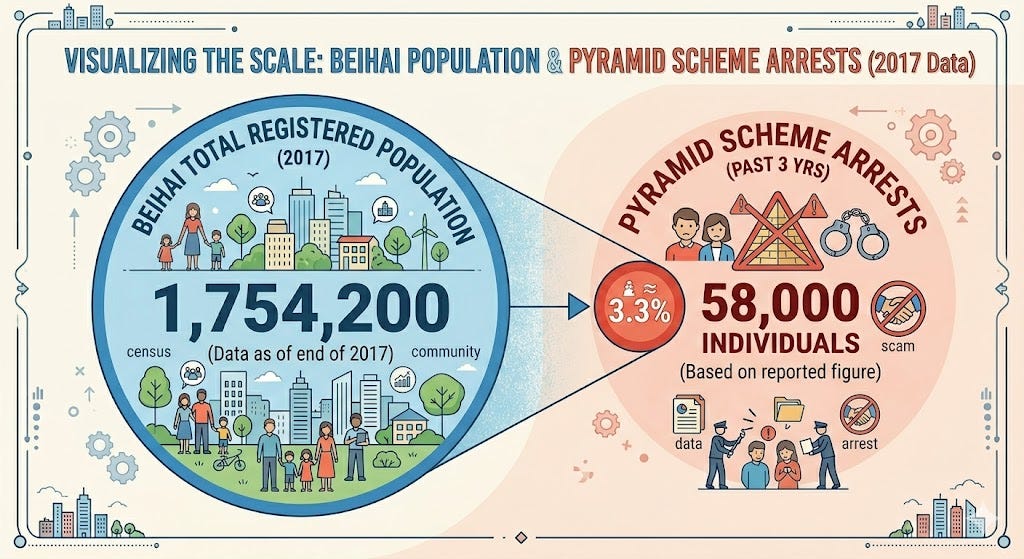
“Beihai is teeming with these scams and about 58,000 people have already been arrested for having ties to pyramid schemes within the past three years.”
https://nextshark.com/massive-pyramid-scheme-raid-china-leads-arrest-1000-people
I reflect on these stories and incidents as a way of reminding us that we’re all human. In spite of all of the technology and sophisticated mechanisms that we now utilize to lead more “advanced” and faster-paced lifestyles, our brains and primal senses still operate now, as they did 70,000 years ago. We’re still very much fallible to the razzle dazzle.
How much of your social media feed comprises of symbols which spread messages of inspiration and unity or self-serving razzle dazzle?

Plato & Aristotle
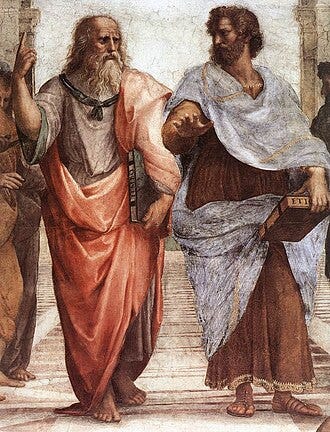
So to summarize, the conceptual essence of symbols lies in representation. We create symbols in our languages, body language, and overall presentation to express and project the universe as we interpret it. They provide a peek into things as we see it, but not entirely it for what it is. Symbolism is coded in subjectivity. Nonetheless, symbolism is meaning-making and is arguably the basis for our human species. It has the power to unite and inspire, but that power can also be hypnotic, and self-serving.
Now, how does all of this pertain to two Greek philosophers who lived over 2,000 years ago?
Well, beginning with the elder of the two: Plato elevated the power and possibilities of symbolic communication by introducing a radical piece of technology in writing. Yes, I am aware of how off what I just wrote sounds but please bear with me.
Based on the current findings, writing has been a part of our societies since 3200 BCE, with it first emerging out of the Sumer Civilization as a combination of different strokes and shapes recorded on stone and clay tabs.
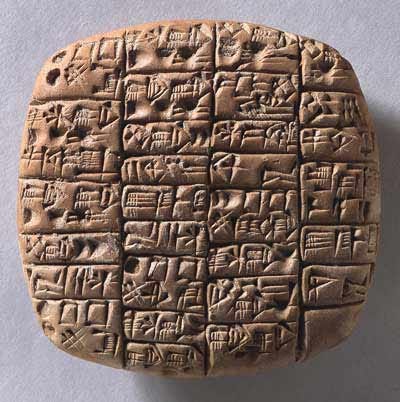
However, from then until the time of Plato writing was used and seen as practical documentation, recording the key details of important events, observations, and declarations for the notice of others. Writing for a long time was almost all about drafting and dispersing legal changes and recording economic transactions and ceremonial events. Poetry and song has always existed, but until the last few thousand years, we created, practiced, refined and delivered them orally.
Plato stretched writing to include thought. For, even the great philosophers and poets of his age like the Greek Socrates and Homer, the Chinese Confucius and Laozi, or the Indian Siddhartha Gautama practiced and memorized their arguments, poetry and teachings for oral recount and delivery. None of what has now been attributed to them was originally written.
Plato invented writing as conversation and rhetoric. The essay you are now reading rests on platonic roots. Even short posts and opinions that people share about their day in writing incorporates elements of his written legacy.
He might not have realized it at the time, but the release of Plato’s Republic would go on to shake the very foundation of humanity and neurology. And more importantly for this discussion, the shape and the expression of the book was a fictionally endowed manifesto for the ideal society. In Republic, Plato outlines a fictional city-state named Kallipolis as the model for social order and governance. By doing so, he charted into the dangerous and seductive territory of writing as manifestation. And here, was the planet’s introduction to writing as thought.
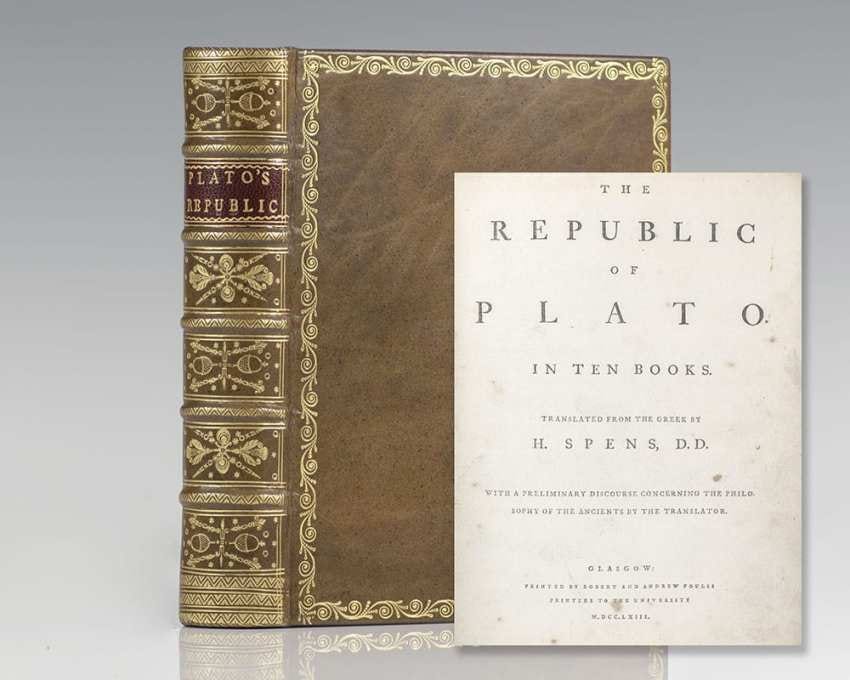
Engaging rhetoric, argumentation and logic in writing opened many up to new worlds of thoughts and possibilities, but for others it merely added another layer of symbols between truth and interpretation - a symbol of a symbol. The release of Plato’s Republic was followed by that of the Septuagint, a Greek translation of a collection of Hebrew texts which would serve as the basis for the Holy Bible.
Because of its belief in ideal states and the concept of morality, Platonism as a worldview, lends itself to the cosmological, wrapping itself in a more top-down layered course of thinking and comprehension. Or to put it more simply, ordering the details around the conclusion rather than ordering the conclusion around the details.
“It has the power to unite and inspire, but that power can also be hypnotic, and self-serving.”
In the next instalment of this post series you will be introduced to Aristotle, the youngest of the Greek Three and arguably the most important of them all. He endeavoured to order his conclusions around the details of a matter, by trying his best to map out content as closely as possible to its observed form. Narrative in all facets of life seems to be split between Platonic and Aristotelian logic, and the study of economics is no exception to that.
The following works contain frameworks and excerpts from a book that is in the works. If you like these kind of breakdowns and scientifically-framed analyses then please subscribe so you can be among the first to get updates on my journey to writing my book.
Also love the bit about merchants basically being rip offs. Its been around for a long time hasnt it. So important to recognise this. Also so much in our world has changed but humans, we do still remain the same but perhaps the risks and dangers we percieved have changed. We no longer have predators but we are given fear through writing and videos. Our bodies are tricked into scarcity mode because the food is devoid of nutrients instead of actual scarcity of food.
Interesting