
Introducing the NEKS of Africa
Africa's mid-income giants

According to Afridigest, Nigeria, Egypt, Kenya and South Africa are considerably outperforming and increasingly dominating the rest of the continent in a number of indicators:
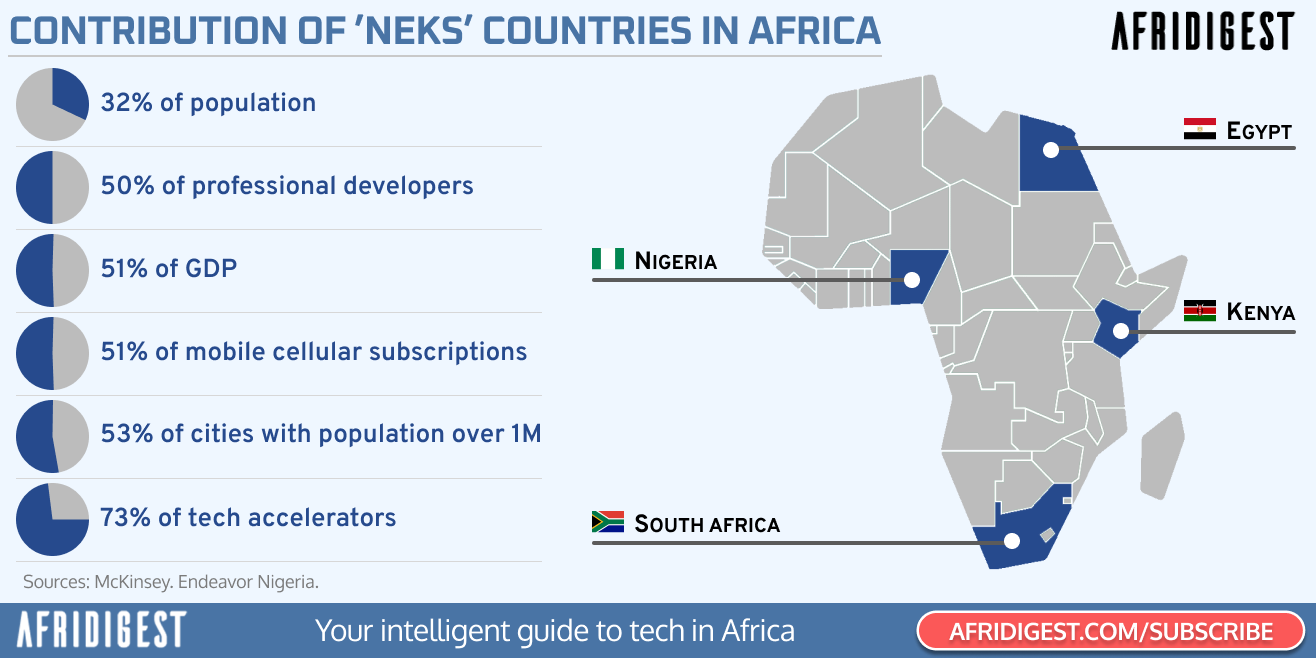
Some quick speculation on why these African nations are leading the rest of the region in so many different economic and tech-related metrics.
1. Spread and use of the English language
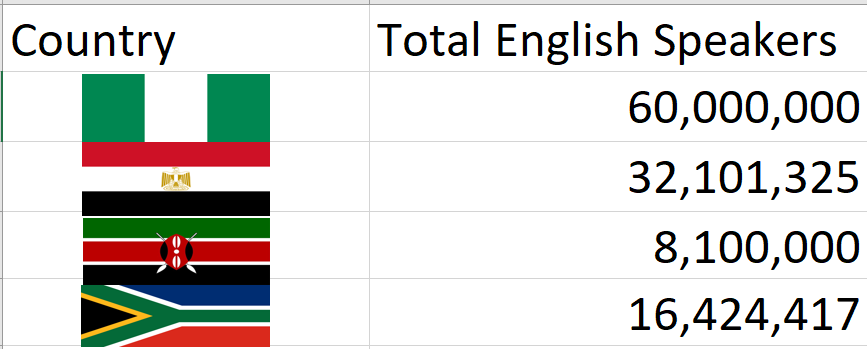
Source: List of countries by English-speaking population - Wikipedia
All NEKS nations either speak English as their official language or as a widely-used lingua franca. This opens up doors to international collaboration, investment and trade.
More importantly, the ability to speak English plugs people into the cultural, business, scientific and tech universe that the language underpins. People in nations where a large number of people speak English as a first or second language are more likely to be culturally aware and have been exposed more to international work practices, mainstream knowledge and literature. Giving these nations a competitive edge over other, non-English speaking counterparts.
2. Almost all NEKS countries have a history of hosting large global migrant communities
This interplays with the fact that four NEKS countries are coastal nations. Compared to other parts of the continents, all of these countries - with the exception of Nigeria - were home to considerable numbers of foreigners, namely the British, along with the French, Greeks and Portuguese. South Africa has always had many people of European origin. 1.5 million foreigners lived in Egypt during the 1930s, and 40,000 were based in Kenya in the same period. Bear in mind that these numbers were recorded at a time when all of these countries were much smaller in population size.
Even in the case of Nigeria, the West African giant saw the construction and use of missionary schools throughout the colonial period, many of them located in southern Nigeria. While data on the number of students attending these schools prior to Nigerian independence is hard to find, with schools like the CMS Grammar School and Christ the King College boasting an alumnus of former Nigerian presidents, governors, musicians and major board directors, it’s safe to say that they left their mark.
Again, more exposure to people and cultures from the rest of the world sooner, better prepares them for cooperation with and integration into the wider global economy.
3. Regional population powerhouses
Excluding Kenya, all of the other NEKS members are the biggest of their region of Africa when it comes to population size. Relatively huge numbers of people constitute for vaster and more lucrative markets , making it easier for them to attract and retain foreign investment and market access closer to their terms.
Closing question: who’s next?
My money is on Tanzania, they have a dense population, abundant food supplies and they recently discovered a load of natural gas. So, TENKS it is?