
How the Politics of Envy is Choking off the Vitality of South Africa
The Bible teaches us that envy is a sin

The African National Congress (ANC) party has brought South Africa to the brink of collapse after 30 years of unopposed rule. We find ourselves here not because of incompetence, but as a result of a politics steeped in ideology and an increasingly washed-up strand of populism. Now, the chickens are coming home to roost as the country has now caught the attention of a new US government.
Here we go again
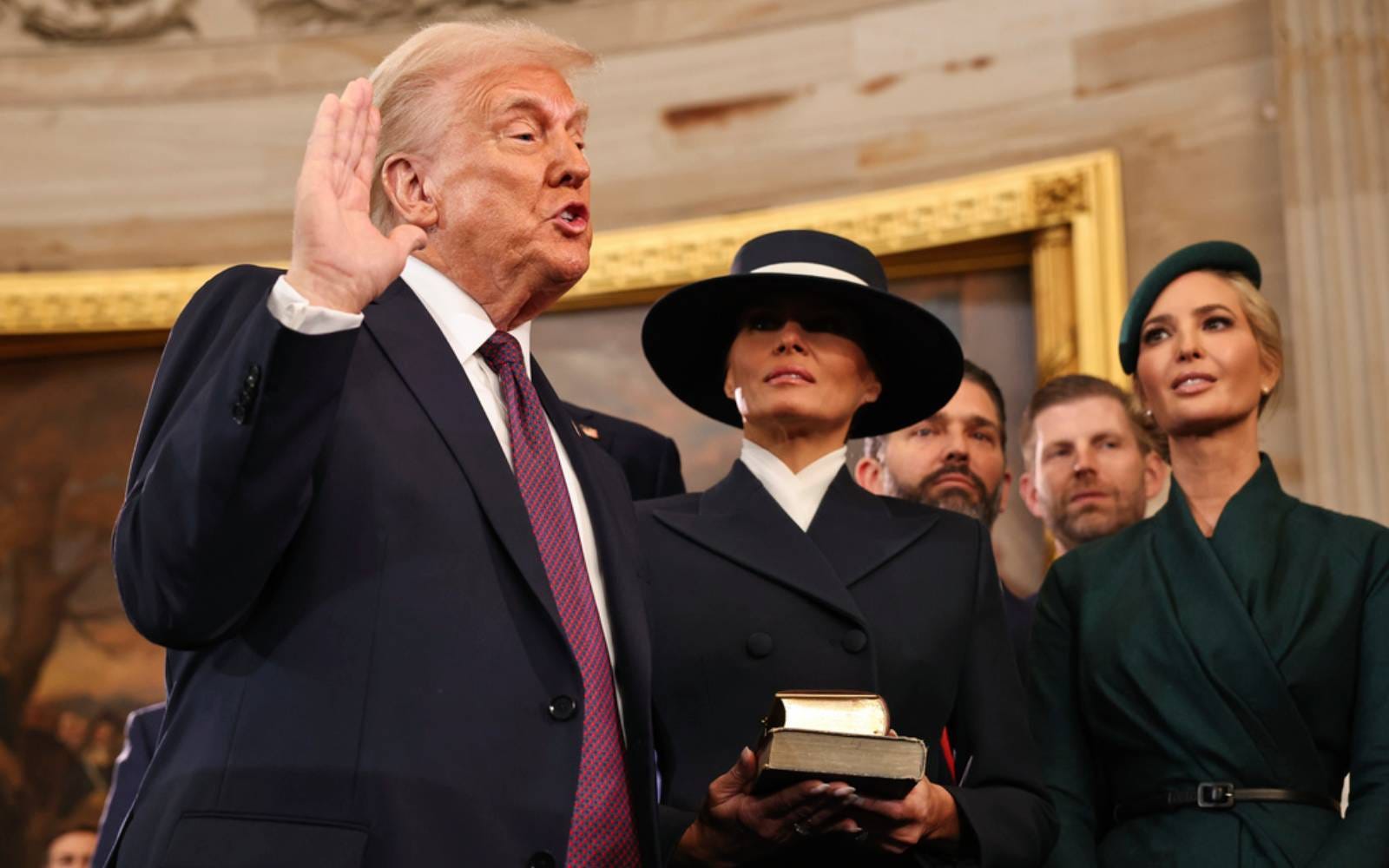
Across the pond over in the USA, there's a new sheriff in Washington. President Donald J. Trump is back in leadership, and this time he's come with back-up. During his 2016 run, Trump walked into the Oval Office as an untested political representative whose surprise presidential victory shocked the world, and indeed The Donald himself (according to some of the rumours out there).
Nearly a decade has elapsed since then and President Trump returns to the helm tested and battle-hardened. To borrow the tagline that Morgoth's Review adapted from the second instalment of the Die Hard series: he's back, and this time it's personal. With an electoral loss mired in controversy, criminal trials complete with full mug shots, and FBI raids into his personal home, Trump has a bone to pick and is under no illusions about power and politics and how they work. We are not looking at the same man from eight years ago.
Nor are we looking at the same kind of Administration. The 2025 Trump Administration is donned with a who's who of hard hitting politicians and influential people - sitting on top of that list, and, frankly the world and maybe even Mars one day, is South African born Elon Musk.
DOGE is rolling back the government goodies

The $400 billion dollar man – with a net worth measuring at about 40 percent of that of the total wealth of his country of birth – has been appointed by the new Trump Administration to head the newly created Department Of Government Efficiency (DOGE). The purpose of DOGE is to make the administrative state as lean as possible by eliminating bureaucratic waste, ensuring that government instruments such as the federal civil service, the State Department, and the IRS, deliver value for the taxpayer.
These developments are important for Africa, South Africa in particular, given that a very powerful and influential South African now has a direct line with the leader of the free world. USAID has already fallen victim to DOGE, jeopardising $12 billion in aid funding for Africa and the rest of the world, with an estimated $500 million of that once directed towards providing lifesaving medical treatment for millions of South Africans.
Which brings us on to the ongoing feud emerging between the Trump Administration and the South African government. At the heart of this beef is the Rainbow Nation’s warming relations with Russia, as well as its role as a key member of the BRICS contingent. But, over the last month, the country’s racialized politics has caught the sights of US ire, widening what is already a clear rift in US-South Africa relations.
The African giant’s move to enshrine the Expropriation Act into law officializes a shift from the “willing buyer, willing seller” mechanism for redistributing white-owned land to the non-white majority, to one of “nil compensation” in cases where certain conditions are met.
Washington responded with disapproval, reiterating their commitment to freeze South African aid. They then rolled out a US resettlement scheme for white South African farmers who believe they have been racially targeted in the country.
US-South Africa relations according to Elon Musk?
Now, it’s hard to believe that Trump’s new colleague in the Oval Office, Elon Musk has had zero influence on the position the Trump Administration has taken in response to the new law. Especially once you consider that Musk has traded verbal jabs with prominent South African politicians like Julius Malema and the South African president himself on South African affairs in the past.
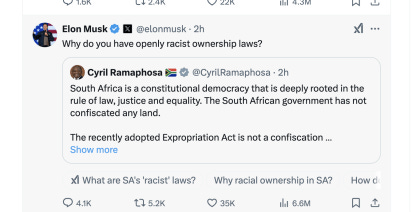
Going beyond the tweets though, while Musk has distanced himself away from his South African heritage, nowadays identifying himself as American, that’s not the same as him completely severing his ties with the country. Just based on what I know about South Africa, I would imagine that he still closely keeps tabs on what’s happening back there.
Indeed, once upon a time ago this writer got the chance to undertake an internship with a consultancy firm in Cape Town. It was the summer of the Marikana Massacre and I was a young college student, eager to finally come to the Motherland so I could behold the beauty of this continent with my own eyes. So allow me to share some personal insights about South Africa, specifically with respect to white South Africans.
Having worked with white South Africans in the past, along with me having a number of white South African friends and associates and bumping into many of them while traveling overseas elsewhere around the world, I have found one common thread. Simply put, you will find that even amongst the ones overseas, a lot of them love their country and identify as South African before anything else.
Even after spending several years abroad in places like the UK, USA, Australia and China, working in what tend to be well-paid and stable roles, for many, their hearts are still at home in South Africa. And this is not me attempting to hold hands with everyone and sing Kumbaya, in some naïve attempt at wishful thinking, the numbers seem to support my anecdotes.
A new group of African returnees
When the chapter of the Apartheid came to a close in 1994, approximately one million white South Africans packed their bags for what they felt were greener (and safer) pastures beyond their home country in the ten years that followed. But from the mid-2000s to the mid-2010s, nearly 350,000 went on to return to South Africa.
Even when you consider the net emigration rates that materialized in the decade leading up to now (which are comparatively low), this number is still nothing short of extraordinary. I have previously written about the need for the Global African Diaspora to build more inroads with Africa, and return to lend their talents and skills to expanding the continent’s developmental capacity. So it’s rather revealing, if not slightly awkward, to discover that the largest group of African returnees might actually be white South Africans.
Point being, Elon Musk, a third generation British South African, who still retains his South African citizenship, and whose father and distant relatives continue to live in South Africa, has not forgotten about the nation. South Africa’s race-obsessed politics are leading the nation to make enemies with the wrong people.
Revisiting the trauma of Apartheid in the name of “progress”
What is more, the race-based land laws in question are misplaced and ineffectual. In the 30 years leading up to the passage of the Expropriation Act, the ANC Government had already transferred millions of hectares of white-owned land to black South Africans via the aforementioned willing buyer willing seller mechanism, but the results of such redistribution have so far been disappointing.
By 2010, the ANC Government’s land redistribution program had tallied up about $4 billion in spending. Yet, in spite of this, it was reported that close to 90 percent of the redistributed farms had failed to generate real livelihoods for the black farmers it was designed to help, with many struggling to even produce valuable supplies for local stakeholders. In fact, almost all of this land isn’t simply underperforming, it’s lying dormant. The minister of Land Reform at the time all but admitted to this, stating that “The government didn’t have a strategy to ensure that the land was productive. If there was a strategy, it was not backed with proper resources,”.
“The government didn’t have a strategy to ensure that the land was productive. If there was a strategy, it was not backed with proper resources,”
A lot of these farms were once run as large commercial operations, raising animals and crops for sale at large retailers and restaurant chains. They were very capital intensive in nature, necessitating the deployment and use of large tractors, combine harvesters and heating devices in order to bear profitable yields. Successfully running these farms demanded a high level of expertise and relevant farming experience from the new operators.
However, a lot of the black farmers in receipt of the land either came from a smallholding background, perhaps producing to meet the needs of a small village or neighbourhood, or worse yet, some had no farming background at all. There was a mismatch between the farming know-how of the assisted black farmers, and the scale and complexity of the farms given to them.
What could have been
In a country double the size of France, a lack of access to land was never the issue
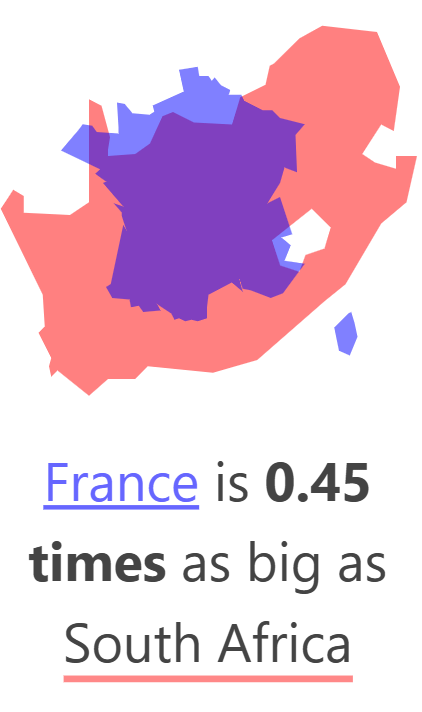
What makes South Africa’s land reform failures even more frustrating is the fact that vast amounts of land—enough to support a thriving black farming sector—were already available. In South Africa alone, land not owned by white farmers was larger than many European countries. The government itself controlled roughly 33 million hectares of land—about a third of the country’s total 100 million hectares. For the record, this figure exceeds that of the 22 percent of white-owned land.
To put 33 million hectares in perspective, that is roughly the size of Germany (35.7 million hectares) or Poland (31.2 million hectares). South Africa didn’t need to seize land from commercial farmers to address agricultural inequality; it simply needed to use the land it already had.
Here is where the underlying issue rests: land doesn’t make the man, the man makes the land. Valuable political bandwidth and capital has been wasted debating and attempting to address the questions of who owns how much of what, instead of how much of what is being produced and where. The grass is not always greener on the other side, only where you tend to.
“Land doesn’t make the man, the man makes the land.”
The South African government, along with the diverse communities that make the nation what it is, need to focus on fostering the market mechanisms that promote more competitive and thriving black-owned farms, while also introducing and supporting access to the kinds of training, machinery and farming practices that adequately prepare black farmers to operate commercial grade farms.
Chase the dream, not the competition
That is the problem with the kind of leftism that has gone on to run rampant within the ANC for decades. It diminishes the role of individual talent and enterprise by reducing us all into interchangeable cogs, that can be shuffled around by the state at will with minimal disturbances made to the production processes that inform and produce the output in question. The premium paid to a farm manager is not the sum of their “exploitation” of the lower-paid farm workers, but a share of the productivity gains their expertise unlocks for the whole operation.
By prioritizing ideology over economic reality, South Africa’s leaders have wasted time, money, and public trust. When the country made way for multiparty and multiracial governance in 1994, the ANC had a once-in-a-lifetime opportunity to channel the goodwill that it had earned nationally and internationally to instigate real change and upliftment. They instead chose to fixate the country’s attention on the past and racial differences. Practicality is what anchors idealism to reality, without it you quickly fly off into the clouds of chaos.
Over 30 years later, South Africa has nothing to show for the racialized politics that have come to define the nation we now know it as today. They have also made enemies with some of the most powerful people in the world as a result, who are now intent on dismantling South African healthcare and trade networks, all the while poaching what’s left of South Africa’s valuable white farming base. Envy is a sin – is it now the ANC’s time to repent?
This was a very well written opinion/narrative piece! Bravo Tim!
Better than alot of reporting I’ve seen